Humerus Anatomy: A Comprehensive Overview
The humerus, the largest bone of the upper limb, is crucial for arm definition and movement. Its detailed anatomy, often found in comprehensive guides, facilitates understanding of its function;
The humerus stands as the sole bone of the upper arm, extending from the shoulder to the elbow. It’s a long bone, vital for a wide range of upper limb movements and structural support. Detailed anatomical studies, frequently compiled into comprehensive humerus anatomy pdf resources, showcase its complex design.
Understanding the humerus requires recognizing its proximal, shaft, and distal regions, each bearing unique landmarks. These features serve as attachment points for numerous muscles, ligaments, and tendons, enabling shoulder and elbow functionality. The bone’s robust structure allows it to withstand significant forces during activities. Visual aids, like labeled diagrams found in educational materials, are essential for grasping its intricacies.

II. Overview of Humerus Function

The humerus’s primary function is to provide structural support for the upper arm and facilitate movement at both the shoulder and elbow joints. Its articulation with the scapula at the glenohumeral joint enables a vast range of motion, crucial for everyday tasks. Detailed humerus anatomy pdf guides emphasize this biomechanical role.
Muscles attaching to the humerus control movements like flexion, extension, abduction, adduction, and rotation. Distally, the humerus’s interaction with the radius and ulna forms the elbow joint, allowing for forearm flexion and extension. The bone’s shape and surface features are directly related to its functional demands, as illustrated in anatomical resources.
III. Anatomical Landmarks: Proximal Humerus
The proximal humerus presents several key landmarks essential for understanding its function and relationships. These features, meticulously detailed in humerus anatomy pdf resources, include the head, neck (anatomical and surgical), and tubercles. The rounded head articulates with the glenoid fossa of the scapula, forming the shoulder joint.
The anatomical neck marks the original epiphyseal line, while the surgical neck is a common fracture site. Greater and lesser tubercles serve as attachment points for rotator cuff muscles. The intertubercular sulcus, or bicipital groove, houses the tendon of the long head of the biceps brachii, as shown in labeled diagrams.
A. Head of the Humerus
The humeral head is a large, spherical prominence forming the glenohumeral joint with the scapula; Detailed humerus anatomy pdf guides emphasize its smooth, articular surface, crucial for a wide range of shoulder movements. It lacks bony attachments directly, relying on ligaments and the glenoid labrum for stability.
Its size and shape contribute significantly to shoulder mobility, but also predispose it to dislocation. Variations in head sphericity and inclination angle are noted in anatomical studies. Understanding its precise dimensions, often illustrated in labeled diagrams, is vital for surgical planning and assessing joint congruity.
B. Anatomical Neck
The anatomical neck is a shallow groove encircling the humeral head, marking the original epiphysial line. Humerus anatomy pdf resources highlight its clinical significance as a fracture site, though less common than the surgical neck. It serves as a point of attachment for the rotator cuff tendons, specifically the superior, middle, and inferior glenohumeral ligaments.
This region’s vascular supply is relatively limited, making it vulnerable to avascular necrosis following fracture. Detailed anatomical illustrations within these guides clearly delineate its position relative to the head and tuberosities. Precise identification is crucial for radiologists and surgeons interpreting imaging and planning interventions.
C. Surgical Neck
The surgical neck is a prominent constriction distal to the tuberosities, representing a common fracture site. Humerus anatomy pdf materials emphasize its vulnerability due to the change in bone structure and surrounding muscle attachments. Unlike the anatomical neck, it doesn’t represent an original epiphysial line but is named for its frequent involvement in surgical procedures.
Fractures here often compromise the axillary nerve and anterior humeral circumflex artery, leading to neurological deficits and vascular compromise. Detailed diagrams within these resources illustrate the surrounding musculature – deltoid and teres minor – and their relationship to fracture patterns. Accurate diagnosis and treatment planning rely on understanding this anatomical landmark.
D. Greater and Lesser Tubercles
The greater and lesser tubercles are bony prominences located laterally and anteriorly, respectively, serving as crucial attachment points for rotator cuff muscles. Humerus anatomy pdf resources meticulously detail these features, highlighting their clinical significance. The greater tubercle is the primary insertion site for supraspinatus, infraspinatus, and teres minor, while the lesser tubercle accommodates the subscapularis.
These tuberosities are frequently involved in rotator cuff tears, making their anatomical relationships vital for surgical repair. Detailed illustrations within these guides showcase the muscle fiber orientation and potential tear patterns. Understanding their precise location and muscular attachments is paramount for accurate diagnosis and effective treatment strategies.
E. Intertubercular Sulcus
The intertubercular sulcus, also known as the bicipital groove, is a prominent groove situated between the greater and lesser tubercles of the humerus. Humerus anatomy pdf materials emphasize its importance as a pathway for the long head of the biceps brachii tendon and the anterior humeral circumflex artery. This groove provides a secure channel, minimizing friction during shoulder movement.
Detailed anatomical diagrams within these resources illustrate the precise boundaries and contents of the sulcus. Variations in its depth and shape can predispose individuals to biceps tendon pathology or vascular compression. Clinicians rely on a thorough understanding of this anatomical landmark for accurate diagnosis and treatment planning.
IV. Anatomical Landmarks: Shaft of the Humerus
The humeral shaft, the central portion of the bone, exhibits several key landmarks crucial for muscle attachment and neurovascular passage. Humerus anatomy pdf resources meticulously detail these features, beginning with the deltoid tuberosity – a roughened area serving as the biceps brachii and deltoid muscle attachment point.
Further down, the radial groove houses the radial nerve and deep brachial artery, while the brachial groove accommodates the brachial artery. These grooves are vital for safe surgical approaches. Understanding the shaft’s contours, as illustrated in anatomical guides, is essential for clinicians assessing fractures or performing procedures near the humerus.
A. Deltoid Tuberosity
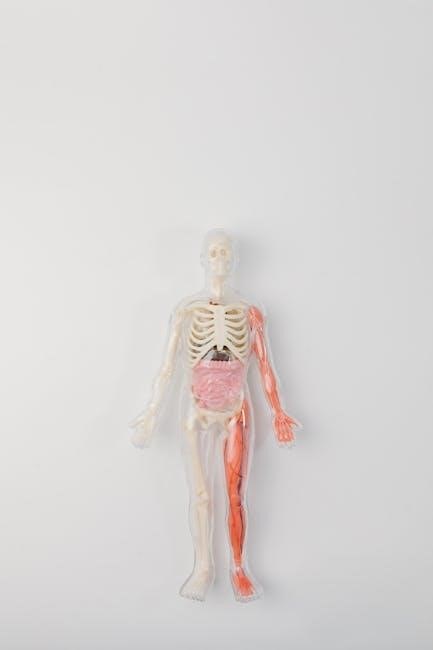
The deltoid tuberosity, a prominent roughened area on the lateral humerus, serves as a critical attachment site for the deltoid muscle. Humerus anatomy pdf materials emphasize its importance in shoulder abduction, flexion, and extension. This distinct feature allows the deltoid’s fibers to effectively leverage the arm.
Palpation of the deltoid tuberosity is a common clinical assessment technique. Its location, roughly midway down the humeral shaft, provides a readily identifiable landmark. Detailed anatomical illustrations within these guides showcase its textured surface, optimized for strong tendon attachment. Understanding its function is key to comprehending shoulder biomechanics.
B. Radial Groove
The radial groove, a deep spiral channel running obliquely down the posterior aspect of the humerus, is a significant landmark. Humerus anatomy pdf resources highlight its role as the pathway for the radial nerve and deep brachial artery. This groove provides crucial neurovascular protection as they travel distally along the bone.
Its location, beginning near the surgical neck and extending towards the lateral epicondyle, is consistently depicted in anatomical diagrams. The groove’s depth and spiral course are clearly illustrated, emphasizing the nerve’s protected trajectory. Clinically, awareness of the radial groove is vital during procedures to avoid iatrogenic nerve injury.
C. Brachial Groove
The brachial groove, situated on the anterior surface of the humerus, serves as a pathway for the brachial artery and accompanying nerves. Humerus anatomy pdf materials consistently demonstrate its location, running along the medial aspect of the shaft. This groove is a key feature for understanding the vascular supply to the arm.
Detailed illustrations within these resources showcase the groove’s course, originating near the surgical neck and extending distally. Its prominence varies between individuals, but its anatomical significance remains constant. Clinicians rely on knowledge of this groove during procedures, particularly when assessing or accessing the brachial artery for pulse checks or interventions.
V. Anatomical Landmarks: Distal Humerus
The distal humerus expands to form crucial components of the elbow joint, enabling forearm movement. Humerus anatomy pdf guides meticulously detail these landmarks, including the capitulum and trochlea – articulating surfaces for the radius and ulna respectively. These structures are vital for elbow stability and range of motion.
Further distal features, like the medial and lateral epicondyles, serve as attachment points for forearm muscles and ligaments. The coronoid fossa and radial fossa provide articulation points during flexion and extension. Detailed diagrams within these resources highlight their precise locations and relationships, essential for surgical and diagnostic understanding.
A. Capitulum
The capitulum is a prominent, rounded, lateral projection of the distal humerus, forming a key component of the elbow joint. Humerus anatomy pdf resources emphasize its smooth articular surface, specifically designed for articulation with the head of the radius. This articulation allows for pronation and supination of the forearm.
Detailed anatomical illustrations within these guides showcase the capitulum’s position relative to other distal humerus landmarks. Understanding its shape and orientation is crucial for comprehending elbow biomechanics and potential injury patterns. Clinical relevance is highlighted, as fractures involving the capitulum are relatively common, particularly in children.
B. Trochlea
The trochlea is a spool-shaped medial projection of the distal humerus, forming a crucial part of the elbow joint’s hinge mechanism. Humerus anatomy pdf materials consistently depict its medial positioning and unique, non-circular articular surface, designed to articulate with the olecranon process of the ulna. This specialized shape permits flexion and extension of the elbow.
These resources often detail the trochlea’s ridges and grooves, which enhance the stability of the elbow joint. Understanding its anatomy is vital for diagnosing and treating elbow dislocations and fractures. Clinical studies, often referenced in these guides, demonstrate the importance of the trochlea in maintaining elbow joint congruity.
C. Medial and Lateral Epicondyles
The medial and lateral epicondyles are bony prominences located on either side of the distal humerus, serving as attachment points for numerous forearm muscles. Humerus anatomy pdf resources highlight their distinct roles in muscle leverage and joint stability. The medial epicondyle is the attachment site for many wrist and finger flexors, while the lateral epicondyle supports extensors.
These guides often illustrate how injuries to these epicondyles – epicondylitis (tennis or golfer’s elbow) – can cause significant pain and functional limitations. Detailed anatomical diagrams within these PDFs emphasize their palpable location, aiding in clinical examination. Understanding their muscular attachments is crucial for comprehending upper limb biomechanics.
D. Coronoid Fossa
The coronoid fossa is a prominent, concave depression located on the anterior distal humerus, specifically on the trochlea. Humerus anatomy pdf materials consistently demonstrate its critical role in elbow joint function, receiving the coronoid process of the ulna during elbow flexion. This articulation prevents hyperextension and provides stability.
Detailed illustrations within these PDFs showcase how the fossa’s shape perfectly accommodates the ulna’s movement. Injuries affecting this area, such as fractures, can severely limit elbow range of motion. Understanding the coronoid fossa’s anatomical relationship to the ulna is essential for diagnosing and treating elbow pathologies, as highlighted in comprehensive anatomical guides.
E. Radial Fossa
The radial fossa, a smaller, smoother depression situated superior to the radial groove on the distal anterior humerus, is a key feature detailed in humerus anatomy pdf resources. It articulates with the head of the radius during pronation of the forearm, allowing for smooth rotational movement at the elbow joint.
These PDFs often include labeled diagrams illustrating how the radial fossa’s concave surface receives the radial head. Its precise location and shape are crucial for maintaining elbow joint stability. Damage to this area, often seen in elbow dislocations, can disrupt forearm rotation. Thorough understanding of the radial fossa is vital for orthopedic assessments and surgical planning.
VI. Articulations of the Humerus
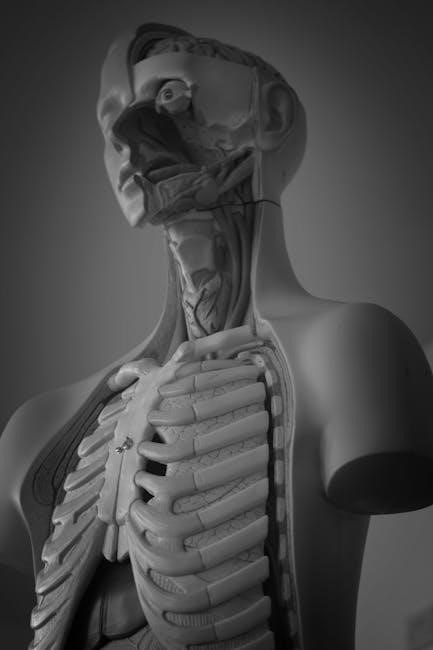
Detailed humerus anatomy pdf guides emphasize the humerus’s two primary articulations: the glenohumeral and elbow joints. The glenohumeral joint, or shoulder joint, is formed by the humerus head and the glenoid cavity of the scapula, enabling a wide range of upper limb motion.
The elbow joint, conversely, is a hinge joint created by the humerus’s trochlea and capitulum with the ulna and radius respectively, facilitating flexion and extension. These PDFs often showcase diagrams illustrating the ligaments reinforcing these joints. Understanding these articulations is crucial for diagnosing shoulder and elbow pathologies, and for planning effective rehabilitation strategies.
A. Glenohumeral Joint
Humerus anatomy pdf resources detail the glenohumeral joint as a ball-and-socket joint, offering the greatest range of motion in the human body. The humeral head articulates with the glenoid fossa of the scapula, but this fit is inherently unstable.
Consequently, the joint relies heavily on the rotator cuff muscles and glenohumeral ligaments for stability. PDFs often illustrate these ligaments – superior, middle, and inferior – and their roles in preventing excessive translation. The labrum, a fibrocartilaginous rim, deepens the glenoid fossa, further enhancing joint congruency. Clinical relevance, as highlighted in these guides, includes common dislocations and impingement syndromes.
B. Elbow Joint
Humerus anatomy pdf materials extensively cover the elbow joint, a complex hinge joint formed by the humerus, radius, and ulna. The distal humerus’s capitulum articulates with the radial head, enabling supination and pronation, while the trochlea articulates with the ulnar olecranon, primarily responsible for flexion and extension.
PDFs often emphasize the importance of the ulnar collateral ligament (UCL) and radial collateral ligament (RCL) for medial and lateral stability, respectively. These ligaments are frequently injured in throwing athletes. Detailed diagrams showcase the coronoid fossa and radial fossa, crucial for smooth joint movement. Understanding this anatomy is vital for diagnosing conditions like cubital tunnel syndrome and tennis elbow.
VII. Muscular Attachments to the Humerus
Humerus anatomy pdf resources dedicate significant sections to muscular attachments, highlighting the bone’s role as a crucial origin and insertion point for numerous muscles. These attachments dictate a wide range of upper limb movements. The shoulder muscles, like teres major, directly attach to the humerus, enabling rotation, adduction, and extension.
PDFs illustrate how muscles acting on the elbow, such as biceps brachii and triceps brachii, also utilize the humerus for leverage. Detailed illustrations pinpoint specific attachment sites, like the deltoid tuberosity and epicondyles. Understanding these attachments is essential for comprehending muscle function and diagnosing related injuries.
A. Muscles Acting on the Shoulder Joint (Teres Major)
Humerus anatomy pdf guides extensively cover the teres major muscle, a significant contributor to shoulder function. Originating from the inferior angle of the scapula, it inserts onto the intertubercular sulcus of the humerus. This attachment point is clearly depicted in anatomical illustrations within these resources.
Teres major facilitates adduction, extension, and internal rotation of the arm. PDFs often detail its synergistic action with latissimus dorsi. Understanding its precise insertion on the humerus is vital for comprehending shoulder biomechanics and potential injury patterns. Detailed diagrams showcase its relationship to surrounding structures, aiding in accurate anatomical identification.
B. Muscles Acting on the Elbow Joint
Humerus anatomy pdf resources thoroughly illustrate the muscles impacting elbow function, with the humerus serving as a key attachment site. These include brachialis, biceps brachii, and triceps brachii, each detailed with origin, insertion, and action. PDFs often feature labeled diagrams pinpointing these muscular connections on the distal humerus.
The capitulum and trochlea of the humerus are crucial for articulation with the radius and ulna, respectively, enabling flexion and extension. Understanding these attachments, as presented in anatomical guides, is essential for diagnosing elbow injuries and planning effective rehabilitation. Visual aids within these PDFs clarify the complex interplay of muscles around the elbow joint.